
Here is the uncomfortable truth most independent hoteliers find out the slow, expensive way: a guest can be looking for your hotel, by name, ready to book, and still hand 15 to 25 percent of that booking to an OTA. Not because they wanted to. Because the comparison screen they landed on quietly steered them there.
That comparison screen is metasearch. And if you have never deliberately decided how your hotel shows up on it, somebody else has decided for you. Usually the somebody is Booking or Expedia, and they are very, very good at it.
This is a MOFU guide for the 15-to-150-room crowd. No revenue-management degree required. Let us unpack how metasearch actually works, who the players are, and how you use it to win back more direct bookings and claw back margin, without pretending you can magically make the OTAs disappear. You cannot, and anyone who tells you otherwise is selling something.
What metasearch actually is (and is not)
Metasearch is a price-comparison layer. A guest types in your hotel, or a destination plus dates, and the metasearch engine pulls live rates from a bunch of sources at once: your direct booking engine, Booking, Expedia, Hotels, Agoda, maybe a wholesaler or two. It lines those rates up side by side on a single screen.
Then it does the one thing that defines metasearch: when the guest taps a price, it sends them away. Metasearch does not take the booking. It is a referral machine. The booking happens on whoever’s site got the click, and that is where the money question lives.
So the distinction that matters:
- An OTA (Booking, Expedia, Hotels) takes the reservation, owns the guest data, and charges you a commission on the stay, typically in that 15 to 25 percent band.
- Metasearch (Google, Trivago, Kayak, and friends) compares prices and passes the click onward. It does not take a commission on the stay itself; instead you pay to be one of the prices shown.
Here is the trap. The hotel rates on a metasearch screen are mostly being advertised by the OTAs. So metasearch, left alone, becomes a megaphone for the exact channels that are taxing you. A guest searching your brand name sees your room on Booking before they see it on your own site, taps Booking out of habit, and you just paid a commission to acquire a guest who already knew your name. We dug into that specific leak in how OTAs siphon off your branded search, and metasearch is the screen where it happens most.
Mental model: an OTA is a shop that sells your rooms and keeps a cut. Metasearch is the price-comparison aisle outside every shop, including your own. You do not have to own the aisle. You just have to make sure your own door is visible in it and bid on it when it counts.
Download this study as a one-page PDF
The main players, and what each one is good for
They are not interchangeable. Each engine has a different audience, a different placement deal, and a different cost model. Treating them as one blob is how budgets get wasted.
Google (Hotel Ads and free booking links)
This is the giant, and for most independents it is where you start and where you concentrate. When someone searches your hotel name or “hotels in your town,” Google shows a hotel panel with dates, a map, and a row of rates. Your direct rate can appear there next to the OTAs.
Two things live inside Google that you need to separate in your head:
- Free booking links. Exactly what it sounds like: organic, no-cost links to your direct booking engine inside that rate comparison. You do not pay per click. You do have to be connected and eligible to show up. This is the highest-leverage freebie in the entire distribution stack and a shocking number of independents simply are not switched on for it.
- Google Hotel Ads. The paid slots, sold on cost-per-click or a commission-per-stay model. This is where you bid to sit above or beside the OTAs, especially on your own brand. We wrote a whole field guide on why bidding on your own name is usually a smart defensive play in bid on your own brand with Google Hotel Ads.
Google also leans on your business profile for the local context, so your local SEO and Google Business Profile work and your metasearch presence feed each other. A clean, complete profile makes the hotel panel richer, which makes your rate more clickable.
Trivago
Trivago is a dedicated hotel metasearch brand. People who use Trivago tend to be in deliberate compare-the-price mode, which means rate parity matters enormously here. If your direct rate is even a dollar higher than an OTA’s, Trivago will happily show the guest the cheaper one and you lose the click. It runs on cost-per-click and offers a sponsored placement model that lets you connect your direct rates into the comparison.
Kayak
Kayak skews toward the trip-planner: flights, cars, and hotels in one place, often a slightly more travel-savvy, US-heavy audience comparing options before they commit. Same core mechanic as the others, cost-per-click comparison, but the intent is often a notch earlier in the journey, so expect it to assist bookings rather than always close them on the last click.
| Player | Audience intent | Cost model | Where it shines for independents |
|---|---|---|---|
| Google free links | All stages, huge brand-name volume | Free | The non-negotiable first move; pure margin |
| Google Hotel Ads | High, often branded | CPC or commission | Defending your brand, beating OTAs to your own guest |
| Trivago | Deliberate price comparison | CPC | Converting parity-checkers when your rate is honest |
| Kayak | Earlier trip planning, US-heavy | CPC | Assisting bookings, reaching comparison shoppers |
How the money flows (the part nobody explains clearly)
There are two ways you pay on metasearch, and you should know which one you are signed up for before you spend a cent.
- Cost-per-click (CPC). You pay every time a guest taps your rate, whether or not they book. Total control, total risk. If your booking page converts badly or your rate is uncompetitive, you can bleed money buying clicks that never become stays. CPC rewards operators who watch the numbers.
- Commission-per-booking / pay-per-stay. You only pay when the stay actually happens, as a percentage. Lower risk, more hands-off, and increasingly the default option many independents prefer because it behaves like a controllable, performance-based version of an OTA commission, except the guest books direct and you keep the relationship and the data.
The honest framing: metasearch is not free money and it is not an escape hatch from the OTAs. It is a way to rebalance the fight. You are paying a smaller, controllable acquisition cost to win bookings that would otherwise have gone through a full-fat OTA commission, while keeping the guest as your guest. That is the whole game: a healthier mix, not a clean break. Our piece on building a healthier OTA mix goes deeper on why “reduce dependence” beats the fantasy of “fire the OTAs.”
Metasearch does not let you escape the OTAs. It lets you stop overpaying to acquire guests who already wanted you, which is a very different and very achievable win.
Why most independents lose on metasearch by default
Three quiet failures, all fixable.
One: you are not connected, so your direct rate never appears. Your rates reach Google, Trivago and Kayak through your booking engine or channel manager, via an integration partner. If that pipe is not set up, the comparison screen shows OTAs and a blank where your direct rate should be. Guess who wins that screen. Getting the plumbing right is genuinely a technical exercise, the same discipline we cover in making your channel manager and SEO play nicely.
Two: your rates are out of parity, so you lose on price. Metasearch is a price-comparison engine. If a wholesaler or an OTA is undercutting your direct rate, the engine will show the guest the cheaper option and you lose the click you paid to compete for. You do not need a revenue team to stay on top of this; you need a routine, which we lay out in parity management without a revenue team.
Three: you have no conversion tracking, so you cannot tell winners from money pits. On CPC especially, flying blind is fatal. You must be able to see, per channel, how many clicks became confirmed bookings and at what cost. Without that, you are gambling, not marketing.
A starter playbook you can actually run
You do not need to light a pile of cash on fire to start. Here is the order of operations for a typical independent.
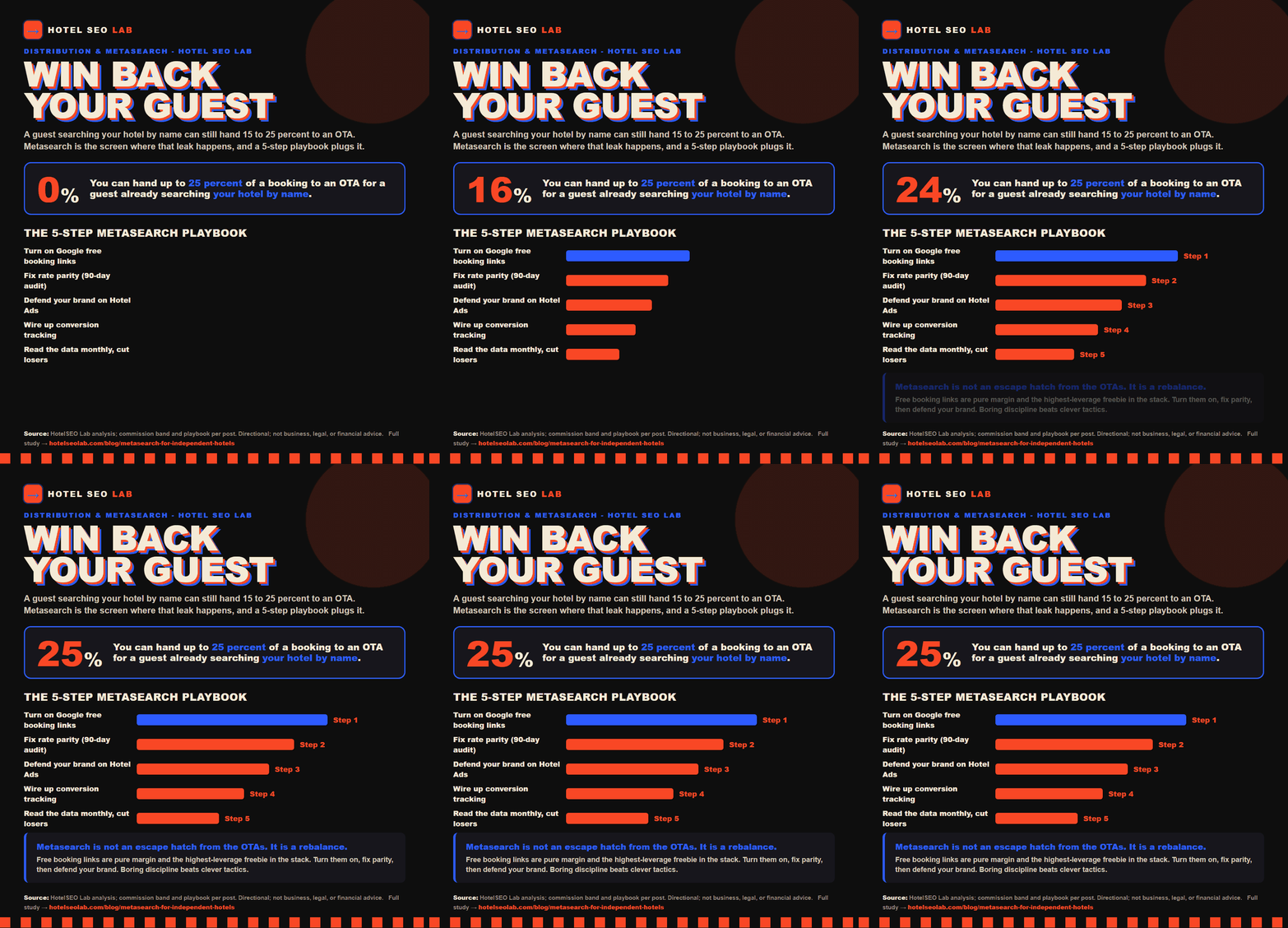
Step 1: Turn on Google free booking links
Pure margin, zero click cost. Get your booking engine connected so your direct rate appears in Google’s hotel panel for free. If you do only one thing from this article, do this. It is the closest thing to free direct bookings in the whole stack.
Step 2: Fix parity before you spend a dollar
There is no point paying for clicks to a rate that loses on price. Audit your direct rate against the OTAs and any wholesalers for the next 90 days of dates. If you are being undercut, fix that first, or every paid click is a click you are likely to lose at the comparison stage.
Step 3: Defend your brand on Google Hotel Ads
Start narrow. Bid on searches that are about your hotel by name. This is the cheapest, highest-intent traffic you will ever touch, and it is the exact moment an OTA would otherwise intercept your guest. Small budget, tight focus, measure relentlessly.
Step 4: Wire up conversion tracking, then expand
Confirm you can attribute bookings to each metasearch channel. Once Google is humming and you trust the numbers, then test Trivago and Kayak for your market, one at a time, with a small budget and a clear read on cost per booking. Lean toward commission-per-stay models if you want lower risk while you learn.
Step 5: Read the data monthly and cut the losers
This is distribution, so treat it like a portfolio. Each month, look at cost per booking by channel. Pour budget into what converts, starve what does not. Boring discipline beats clever tactics every time.
Illustrative, not a promise: imagine 100 guests a month searching your hotel by name. If even a third of them currently tap an OTA out of habit and you win them back through free links plus a modest brand bid, that is roughly 33 stays a month where you keep the full margin and the guest relationship instead of paying away a chunk of each one. Your real numbers will differ. The pattern, recapturing branded intent, is what holds.
The honest scoreboard
Metasearch is one of the few levers where a 40-room independent can stand on near-equal footing with a chain on the searches that matter most: the ones about your own property. You will not outbid the OTAs across an entire city, and you should not try. But on your brand, on your free links, on a tidy parity setup, you can absolutely win a healthier share of the clicks that were always meant to be yours.
That is the realistic prize. Not escaping the OTAs, but needing them a little less every month, keeping more margin per booking, and owning more guest relationships outright. Compounded over a year, that is the difference between a hotel that works for its distribution partners and one that makes its distribution partners work for it.
If you want a human to map your metasearch setup, plug the parity and tracking leaks, and turn on the free wins first, that is exactly what we do. See our pricing for how engagements are structured, or just book a call and we will tell you straight where your easy direct-booking wins are hiding.